
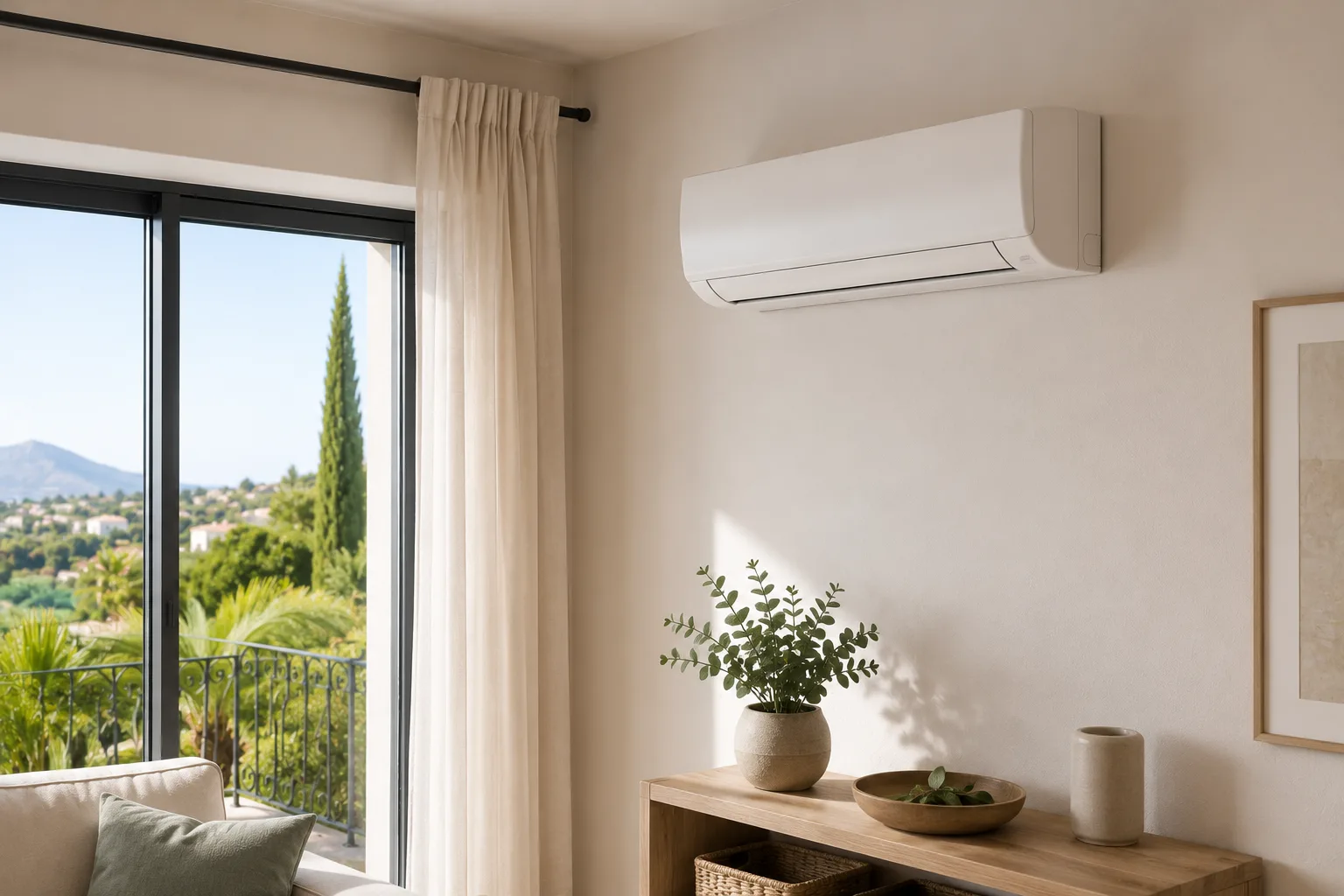
Some homes in Spain can manage without air conditioning. Many Costa del Sol properties cannot, especially apartments, villas with large glass areas and homes used by guests in July and August.
The answer depends less on Spain as a whole and more on the property.
Climate matters
Southern Spain has hotter summers than northern regions such as Galicia or the Basque Country. Inland towns can be hotter still, while coastal properties may also deal with humidity.
On the Costa del Sol, air conditioning is often used for cooling in summer, heating in winter and dehumidifying damp rooms.
Property design matters
Traditional homes with thick walls, shade and good airflow can stay cooler than modern apartments with large windows and limited cross-ventilation.
South-facing rooms, top-floor flats and bedrooms under roof terraces usually need more cooling than shaded ground-floor rooms.
Lifestyle matters
Year-round residents often want steady comfort and lower running costs. Rental owners need a system guests can understand. Owners who visit only a few weeks a year may want fast cooling after the property has been closed up.
Those are different needs, and they can lead to different recommendations.
Efficiency matters
Modern inverter units are much more efficient than older fixed-speed systems. They can also heat a room in winter without needing a separate electric heater.
A survey should look at room size, insulation, sun exposure, outdoor-unit location and how the property is actually used.
If you are unsure whether to fit air conditioning, replace an older unit or service what you already have, EnviroCare can inspect the property and explain the options clearly.